

The Cell – The Fundamental Unit of Life
The cell is the basic structural unit—the main building block that creates the form of all known living things. It is also the functional unit, meaning it is the place where all the work and tasks of life are carried out. Finally, it is the fundamental biological unit, being the very basis of all life. A cell is the smallest part of a living thing. The study of cells is called cytology.
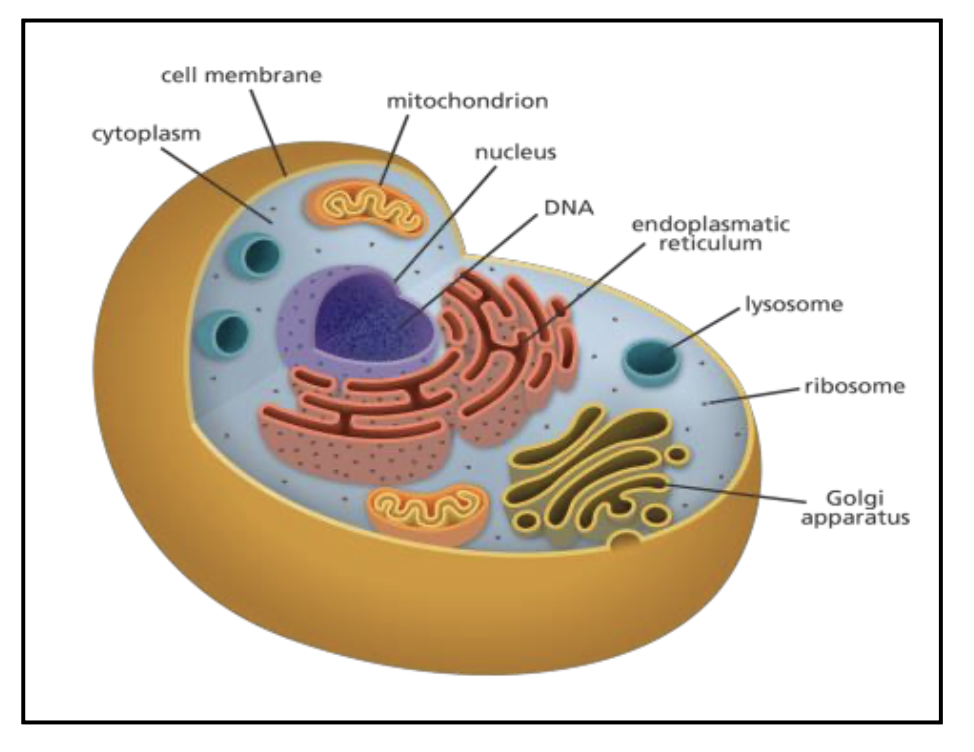
Cells contain a jelly-like substance called cytoplasm, which is held inside a membrane. This substance holds many biomolecules, which are key chemical components essential for life, such as proteins and nucleic acids. The cell membrane, also known as the plasma membrane, is a biological barrier that surrounds the cell’s contents. This membrane’s job is to separate the inside from the outside, acting as a clear boundary to protect the cell from its outer environment. All food entering the cell and all waste leaving it must pass through this membrane.
Some cells have an additional layer outside their membrane called a cell wall. The cell wall acts to provide extra protection to the cell, supporting the cell membrane.
Living things can be classified as unicellular organisms—those made up of only one single cell, like bacteria—or multicellular organisms—those made up of many, many cells, like plants and animals.
Most plant and animal cells are visible only under a microscope. They are so tiny that you need a special tool to see them. They are microscopic in size. Only a few are large enough to be seen without a microscope. Cells come in different shapes and sizes, but they all share a similar composition—meaning they have the same basic ingredients—and structure—meaning they have a similar way of being put together or organized. Most cells have a nucleus, which acts as a control center for all cell activities.
A human cell has genetic material—the inherited information that dictates the cell’s traits—contained in the cell nucleus (the nuclear genome) and in the mitochondria (the tiny powerhouses that generate energy for the cell). In humans, the nuclear genome is divided into 46 linear DNA strands called chromosomes. This includes 22 pairs of homologous chromosomes, which are pairs that are very similar and matching, and a pair of sex chromosomes, which determine the biological gender of the individual.
👩🏫 Review 1 (Short): Basic Unit & Structure
| Role | Dialogue |
| Teacher | What is the fundamental unit of life? |
| Student 1 | —— |
| Teacher | What is the study of cells called? |
| Student 2 | —— |
| Teacher | What is the jelly-like substance inside the cell, and what does it hold? |
| Student 1 | —— |
| Teacher | Which part is the cell’s control center? |
| Student 2 | —— |
🛡️ Review 2 (Short): Barriers & Classification
| Role | Dialogue |
| Teacher | What is the main job of the Cell membrane? |
| Student 1 | —— |
| Teacher | What is the purpose of the Cell wall? |
| Student 2 | —— |
| Teacher | How do we classify organisms based on cell number? |
| Student 1 | —— |
| Teacher | What is the typical size of most cells? |
| Student 2 | —— |
🧬 Review 3 (Short): Human Genetics
| Role | Dialogue |
| Teacher | Where is the human genetic material stored? Name two places. |
| Student 1 | —— |
| Teacher | What do the mitochondria do? |
| Student 2 | —— |
| Teacher | How many chromosomes are in the human nuclear genome? |
| Student 1 | —— |
| Teacher | How are those 46 chromosomes paired? |
| Student 2 | —— |
👩🏫 Review 1 (Short): Basic Unit & Structure
| Role | Dialogue |
| Teacher | What is the fundamental unit of life? |
| Student 1 | The Cell. It’s the basic structural and functional unit. |
| Teacher | What is the study of cells called? |
| Student 2 | Cytology. |
| Teacher | What is the jelly-like substance inside the cell, and what does it hold? |
| Student 1 | It’s Cytoplasm, holding key biomolecules like proteins. |
| Teacher | Which part is the cell’s control center? |
| Student 2 | The Nucleus. |
🛡️ Review 2 (Short): Barriers & Classification
| Role | Dialogue |
| Teacher | What is the main job of the Cell membrane? |
| Student 1 | To act as a biological barrier that separates the inside from the outside, controlling passage. |
| Teacher | What is the purpose of the Cell wall? |
| Student 2 | It provides extra protection and support to the cell membrane. |
| Teacher | How do we classify organisms based on cell number? |
| Student 1 | Unicellular (one cell, like bacteria) or Multicellular (many cells, like plants). |
| Teacher | What is the typical size of most cells? |
| Student 2 | They are microscopic. |
🧬 Review 3 (Short): Human Genetics
| Role | Dialogue |
| Teacher | Where is the human genetic material stored? Name two places. |
| Student 1 | In the nucleus (nuclear genome) and the mitochondria. |
| Teacher | What do the mitochondria do? |
| Student 2 | They are the powerhouses that generate energy. |
| Teacher | How many chromosomes are in the human nuclear genome? |
| Student 1 | 46 linear DNA strands. |
| Teacher | How are those 46 chromosomes paired? |
| Student 2 | 22 homologous pairs and one pair of sex chromosomes. |
Từ vựng cần nhớ
| English Word | IPA | Simple English Definition |
| structural | /’strʌktʃərəl/ | Relating to the way something is built or organized. |
| functional | /’fʌŋkʃənl/ | Relating to how something works or what its purpose is. |
| biological | /ˌbaɪəˈlɒdʒɪkl/ | Related to living things or life processes. |
| cytology | /saɪˈtɒlədʒi/ | The scientific study of cells. |
| cytoplasm | /’saɪtəʊˌplæzəm/ | The jelly-like material that fills a cell and holds all the parts. |
| biomolecules | /ˌbaɪəʊˈmɒlɪkjuːlz/ | Important chemical parts that are needed for life, like proteins. |
| membrane | /’membreɪn/ | A thin layer that acts as a wall or boundary around a cell. |
| separate | /’seprət/ | To keep two or more things apart. |
| cell wall | /sel wɔːl/ | A hard outer layer that gives extra protection and support to some cells. |
| unicellular | /ˌjuːnɪ’seljələr/ | Describing a living thing that has only one cell. |
| multicellular | /ˌmʌlti’seljələr/ | Describing a living thing that is made of many cells. |
| visible | /’vɪzəbl/ | Able to be seen. |
| microscope | /’maɪkrəskəʊp/ | A tool used to make very small things look much larger. |
| composition | /ˌkɒmpə’zɪʃən/ | The basic materials or ingredients that something is made from. |
| structure | /’strʌktʃər/ | The way the parts of something are put together or organized. |
| nucleus | /’njuːkliəs/ | The main control center inside a cell. |
| genetic material | /dʒə’netɪk mə’tɪəriəl/ | Information passed down from parents that decides the traits of an organism. |
| mitochondria | /ˌmaɪtəʊˈkɒndriə/ | Small parts inside a cell that make energy. |
| chromosomes | /’krəʊməsəʊmz/ | Thread-like structures that carry the genetic information (DNA). |
| homologous | /hə’mɒləɡəs/ | Being very similar or matching, often referring to pairs of chromosomes. |
| sex chromosomes | /seks ‘krəʊməsəʊmz/ | The pair of chromosomes that decides the gender (male or female) of an individual. |
